
The Best Low Whistle for Beginners
The best low whistle for beginners moving up from a standard D: what the stretch, weight and air demands really feel like, and which models ease them.
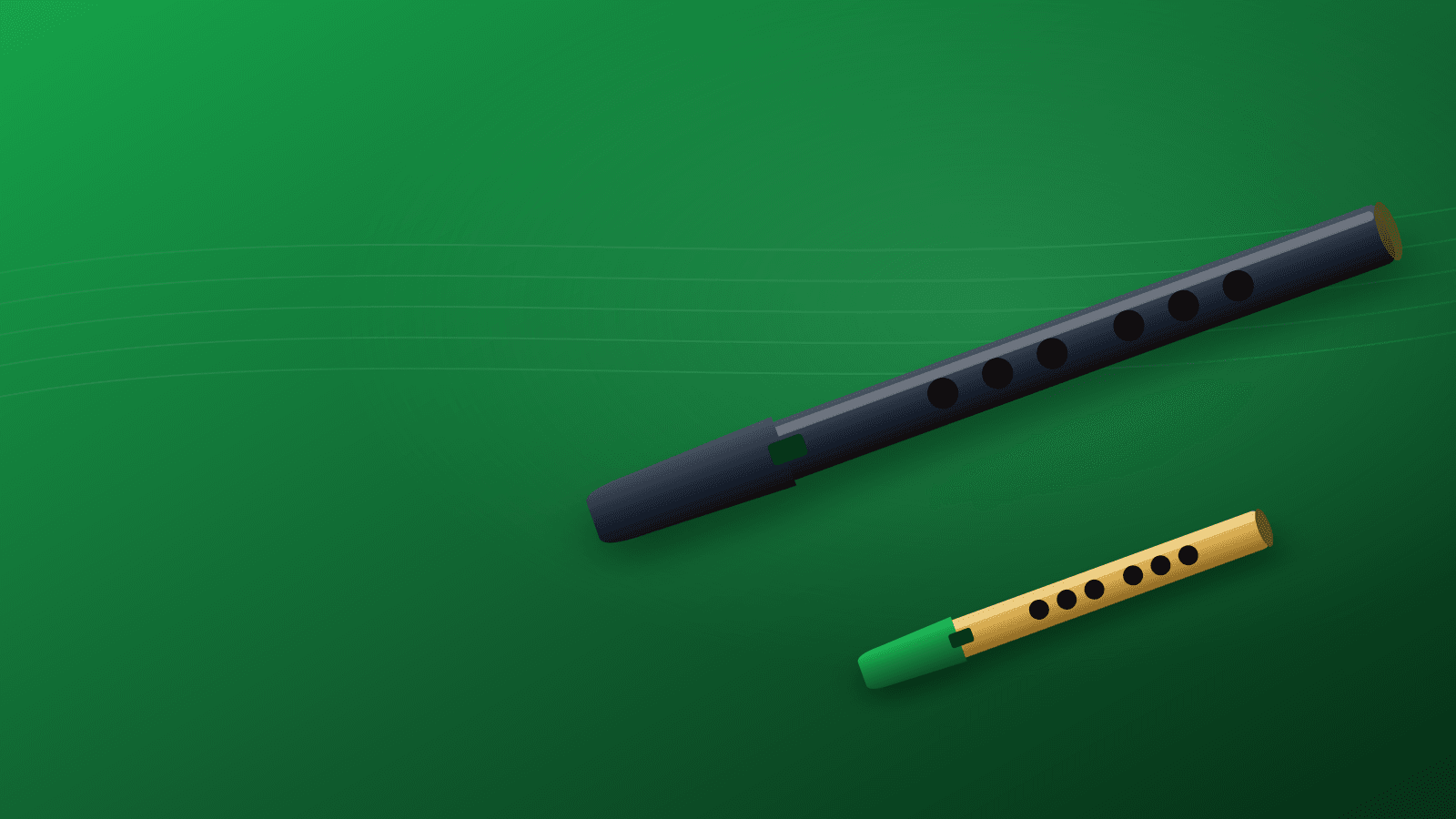
A low whistle is a full octave lower than the standard D whistle almost everyone starts on, and for a true beginner to the instrument, it isn't the right first whistle at all. If you already play a standard D and are ready for the deep, breathy sound behind Celtic film scores and Riverdance, the best low whistle for you is one that manages the stretch, weight and air demands you haven't had to deal with before.
Why "Beginner" Means Second Whistle Here
The six-hole fingering on a low whistle is identical to a standard whistle, note for note. What's different is everything physical: the holes sit further apart, the tube is longer and heavier in the hand, and a full breath empties faster into all that extra air column. Trying to learn the instrument and the low whistle's demands at the same time usually means fighting the whistle instead of learning the music. Get comfortable on a standard D first, covered in how to play tin whistle for beginners, then add a low whistle once your fingers and lungs already know the basics.
The Stretch: Piper's Grip
Most players can't reach a low whistle's holes with their fingertips the way they do on a standard whistle. Instead you cover them with the flat pads of your fingers, or even the middle joints, a hand position usually called the piper's grip. It takes real practice to seal six widely spaced holes without a gap, and a small leak costs a low whistle far more tone than it would a standard one. If hand size is a genuine concern rather than just unfamiliarity, look specifically for a close-spacing model, several makers build one to ease exactly this stretch.
The Weight and the Air
A low whistle is longer and heavier than a standard D, which changes your hand position and balance more than you'd expect from the size difference alone. Breath changes too: the bigger air column wants a slower, more relaxed airstream rather than the fast, focused air a standard whistle's second octave needs, and a full lungful simply runs out faster. Give yourself more air per phrase than feels natural at first, and read breathing and air control if your phrasing gets choppy on longer passages.
Which Low Whistle to Actually Buy
The MK Pro Low D is close to the industry standard for that soundtrack sound, an aluminium whistle with a distinctive, reverberant "cosmic" tone that most listeners would recognise without knowing its name. It's built to last and looks the part, but it demands the full piper's grip and confident breath control from day one. The Carbony Low D, built from carbon fibre, is the other name worth knowing, especially if the stretch is a real obstacle: it's light, durable, and available in a close-spacing version that noticeably eases the reach for smaller hands, though it sits at a premium price either way. There's no true budget tier for a genuinely good low whistle the way there is for a standard D, the engineering needed to voice a long tube evenly across two octaves makes this an investment instrument by nature.
Aluminium vs Carbon Fibre in Practice
The material choice between the two leading options isn't just cosmetic. Aluminium, as on the MK Pro Low D, is heavier in the hand and conducts cold quickly, worth knowing if you plan to play outdoors or in an unheated hall, since a cold metal low whistle takes longer to warm up to pitch and can feel unpleasant against the lips for the first few minutes. Carbon fibre, as on the Carbony, is noticeably lighter and more temperature-stable, which matters more on a low whistle than a standard one simply because there's more tube in contact with your hands and more air to warm through. Neither material changes the fingering or the piper's grip requirement, the choice is about comfort and where you'll actually play, not tone quality.
Getting Past the First Few Weeks
Expect your first sessions on a low whistle to feel like starting over, even if you're an accomplished standard-whistle player. The piper's grip needs its own practice time before it becomes automatic, and it's worth spending that time on slow scales rather than jumping straight into a full tune, a leaking hole is much easier to diagnose note by note than buried inside a fast passage. Breath is the other adjustment: expect to run out of air noticeably sooner than on a standard whistle until your lungs and phrasing catch up with the bigger bore, and don't be surprised if your first attempts at held notes waver where they wouldn't on a D whistle.
Tunes That Suit a Low Whistle
Low whistle favours slow, sustained melodies over fast dance tunes. Concerning Hobbits is exactly the kind of cinematic, slow-moving theme the low D was made for. The South Winds is a slow air built from long held notes that let the low whistle's tone breathe. The Mermaid works well at a slightly slower tempo than written, letting the deeper voice carry the melody without rushing it.
Questions players ask
Can a beginner learn tin whistle on a low whistle?
It's not recommended. The wide hole spacing, piper's grip and heavier breath demands are much easier to pick up once your hands and lungs already know a standard D whistle. Start there and add a low whistle as a second instrument.
What size low whistle should I buy first?
Low D. It's the standard size almost every maker and tutorial means by "low whistle," and it's the one used on the great majority of recordings and film scores that made players go looking for the sound in the first place.
Does a low whistle use different fingering from a standard whistle?
No, the fingering is identical, just spaced further apart on a bigger instrument. Everything you already know from a standard D whistle transfers directly, only the hand position and breath need new practice.
How long does it take to get comfortable on a low whistle?
There's no fixed timeline, but most players who already play standard whistle well report weeks rather than months before the piper's grip stops feeling deliberate. Slow, regular practice on scales and simple airs gets you there faster than jumping straight into fast tunes.