
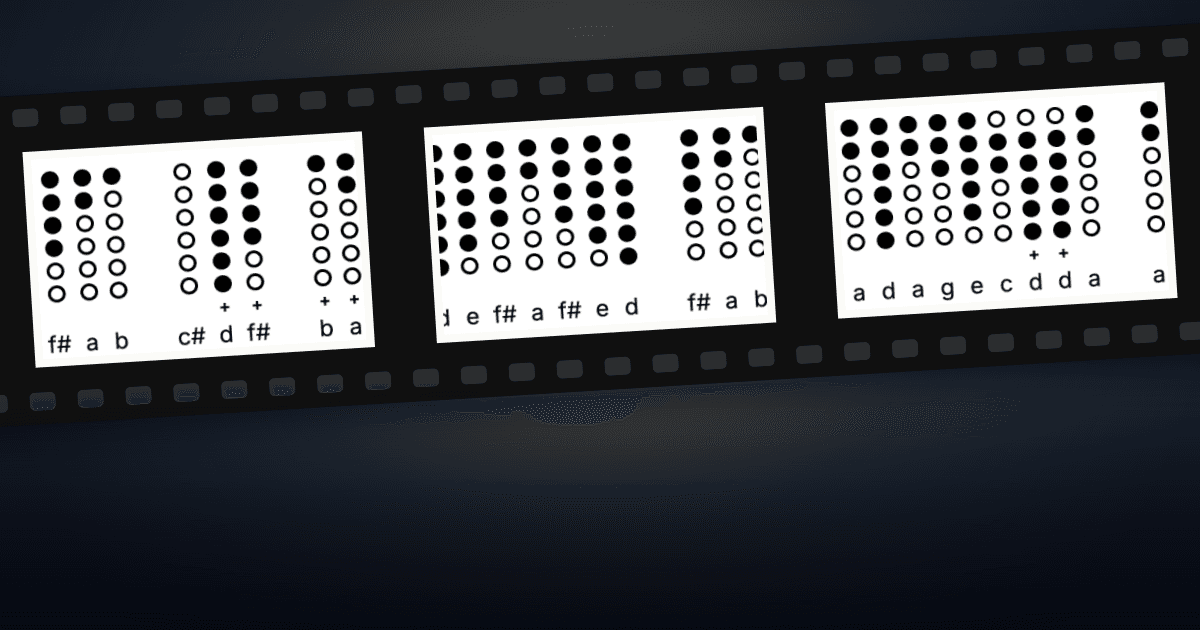
The Tin Whistle in Titanic, Braveheart & LOTR
How a $15 tin whistle ended up in Titanic, Braveheart, and Lord of the Rings — who really played it, and free tabs to learn the tunes yourself.
A tin whistle costs about as much as a movie ticket. It's stamped out of a strip of nickel-plated brass, sold in a cardboard sleeve, and marketed mostly to kids and beginners. And yet, if you've cried at Titanic, felt your pulse jump during Braveheart, or gone quiet during "Concerning Hobbits," a tin whistle was almost certainly doing the emotional heavy lifting. Hollywood's biggest composers keep reaching for the cheapest instrument in the shop, and it keeps working.
This isn't a coincidence, and it isn't really a mystery either. Once you know what to listen for, you start hearing tin whistle everywhere in film scores — usually in the quietest, most human moment of the film, right before the orchestra swells back in. Here's how a penny whistle ended up carrying some of the most famous melodies ever written for the screen.
Titanic: the whistle under "My Heart Will Go On"
Start with the biggest one. James Horner's score for Titanic (1997) became the best-selling orchestral film score album in history, and its most famous cue opens not with strings or Céline Dion's voice, but with a solo tin whistle line.
That whistle belongs to Tony Hinnigan, the Glasgow-born multi-instrumentalist who recorded penny whistle and low whistle across the Titanic score alongside uilleann piper Eric Rigler. Wikipedia's breakdown of "My Heart Will Go On" credits Hinnigan on tin whistle and notes the instrument is "prominent, supported by melodic strings and rhythm guitars" — and on "Hymn to the Sea," Hinnigan's whistle and Rigler's uilleann pipes trade the melody in unison after Sissel Kyrkjebø's wordless vocal opens the theme. Sissel's voice carries the film's grief; the whistle and pipes carry its warmth. Horner leaned on the same two players again and again because that combination — breathy vocal, keening pipes, clear whistle line — became the sound of the whole picture. Eric Rigler's own credit list, documented on Wikipedia, confirms Titanic alongside a long run of other Horner scores where the same Celtic-instrument pairing shows up.
Here's "Hymn to the Sea" — Sissel's vocal opens it, then listen for Hinnigan's whistle and Rigler's pipes taking the theme together:
We don't have a Titanic tab up yet, but if that whistle-and-pipes texture is what you're chasing, our library has hundreds of tabs built around exactly that kind of slow, singable Irish melody — a good next stop after you've worked through this list.
Braveheart: the same two players, a different battlefield
Two years before Titanic, the same composer used almost the same trick to score a very different kind of longing. James Horner's Braveheart (1995) leans on uilleann pipes and whistle for its Scottish Highlands atmosphere, even though the pipes and whistle themselves are Irish instruments standing in for a Scottish setting — a detail pipers and whistle players have debated for thirty years, but one that never seems to bother anyone watching the film. (For what it's worth, the whistle player at least was genuinely Scottish — Hinnigan was born in Glasgow.)
The credits back this up directly. A French library catalog entry for the soundtrack lists the personnel plainly: "Tony Hinnegan, kena, tin whistle; Eric Rigler, bagpipe." It's the same pairing as Titanic, recorded two years earlier — Rigler on uilleann pipes and Highland bagpipes, Hinnigan moving between the Andean kena flute and tin whistle depending on the cue. A profile of Hinnigan's career puts it more bluntly: "his soulful flute and whistle melodies stirred the senses in the action-packed Braveheart." You can hear that whistle work most clearly in the film's quieter themes, away from the pipe-and-drum battle music, where the melody needs to sound fragile rather than martial.
If you want to try that theme yourself, we've got a Braveheart Theme tab built for D whistle — grab a whistle and the finger chart if you're still getting your bearings on the notes. Here's how the intro opens:
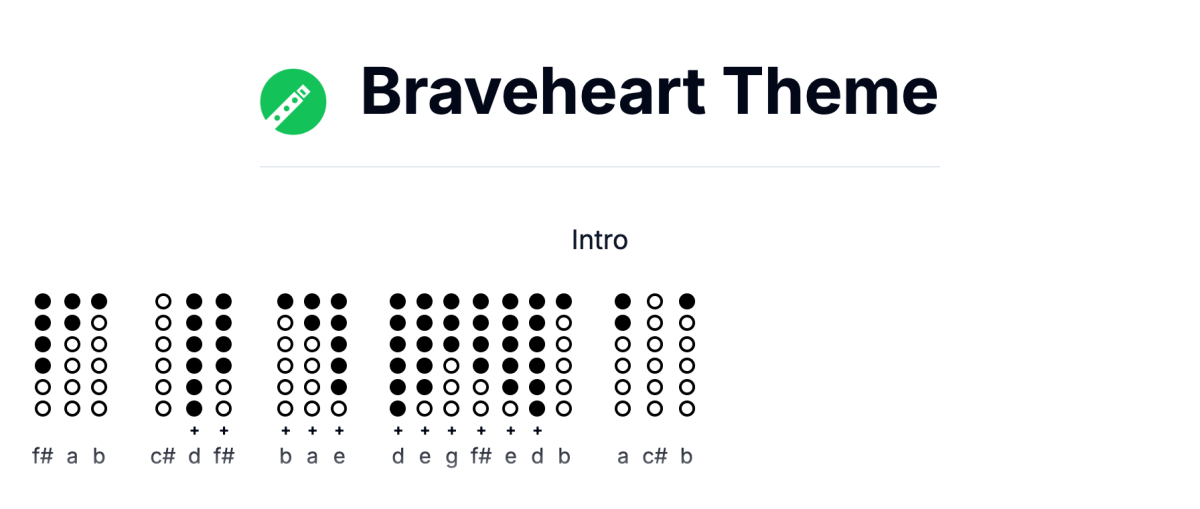
The opening of the Braveheart intro — see the full tab with backing track.
Concerning Hobbits: the whistle that means "home"
If Titanic made the tin whistle famous, "Concerning Hobbits" made it beloved by an entire generation of whistle players. It's the single most-viewed tab on this site by a wide margin, and it's easy to hear why: Howard Shore built the entire Shire theme — the musical idea that says "home," "safety," "small and green and warm" every time it appears across three Lord of the Rings films — around a solo tin whistle line.
The Wikipedia entry for the piece is specific about the arrangement: the suite opens with "a light statement of the main Shire theme on a solo tin whistle" before the full folk band — fiddle, mandolin, Celtic harp, bodhrán, hammered dulcimer — and eventually the full symphony orchestra join in underneath it. What's genuinely hard to pin down, even after digging through soundtrack databases, forums, and liner-note discussions, is exactly which musician plays that opening line. Irish flute and whistle player Alan Doherty is the name most often connected to the trilogy's woodwind sessions with the New Zealand Symphony Orchestra, but whistle-player forums that have chased this question for over twenty years still haven't landed on a single, sourced answer for who's credited on that specific cue. We'd rather tell you that honestly than repeat a guess as fact.
What isn't in doubt is the tune itself, and it's the reason this site exists in the form it does: our Concerning Hobbits tab has been viewed over 17,000 times, more than any other tab we host. This is how it starts — that famous rising
d e f#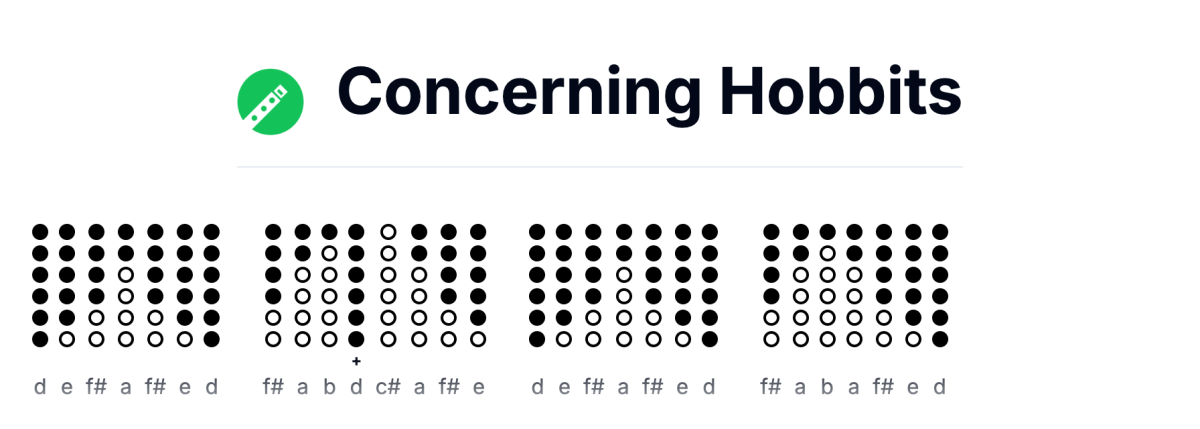
The Shire theme's first phrases — the full tab and backing track covers the whole piece.
And here's the original recording to play along against:
Riverdance: the low whistle goes to Broadway
Not every whistle-in-a-big-production story starts in a recording studio. Riverdance began as a seven-minute interval act at the 1994 Eurovision Song Contest and grew into one of the most-seen stage shows on earth — and its overture, "Reel Around the Sun," opens with a low whistle solo, not a fiddle or a full band.
That solo was written for and performed by Davy Spillane, the piper and low whistle player who did more than almost anyone else to bring the low whistle out of session-music obscurity and into mainstream ears. Bill Whelan's score uses Spillane's low whistle as a slow-air introduction — effectively an overture for the whole show — before the reel proper kicks in and the dancers take over. It's a different kind of "film music" story than Titanic or Lord of the Rings, since Riverdance lives on stage and in TV specials rather than in a single movie, but the instrument's job is identical: set an emotional tone before anyone starts moving.
The original 1994 broadcast is still on the official Riverdance channel — the low whistle enters right at the start, alone over the synth pad, seven minutes before anyone knew they were watching history:
Our Reel Around the Sun tab covers the tune on standard D whistle, which is the easiest way into a piece that was written for its low whistle cousin. Fair warning — it moves:
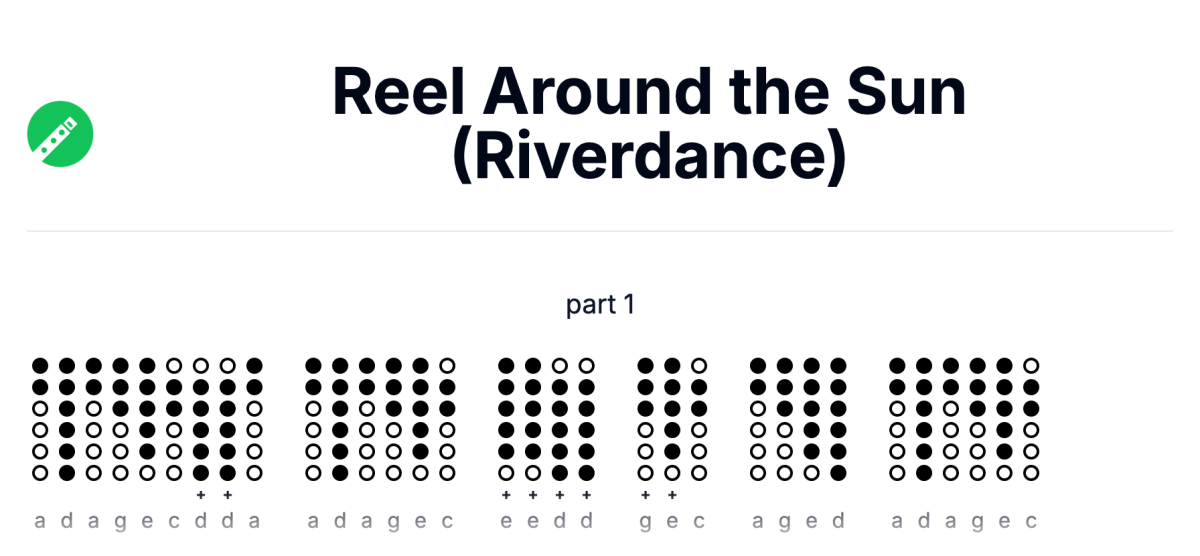
Part 1 of Reel Around the Sun — all four parts are in the full tab.
A quiet cousin worth knowing: Ashokan Farewell
One more tune belongs in this story, even though it never touched a tin whistle in its original form. "Ashokan Farewell" is the achingly simple waltz that plays over and over through Ken Burns' 1990 documentary The Civil War — and most viewers assume it's a genuine 19th-century tune. It isn't. Fiddler Jay Ungar wrote it in 1982 at the end of a summer at the Ashokan fiddle and dance camp in upstate New York, and it's the only piece of modern music on that entire soundtrack; everything else is authentic period material.
It was written for fiddle, and in the film that's exactly what you hear. But the melody's slow, stepwise phrasing translates onto tin whistle almost note for note, which is exactly why whistle players have quietly adopted it as one of their own over the decades:
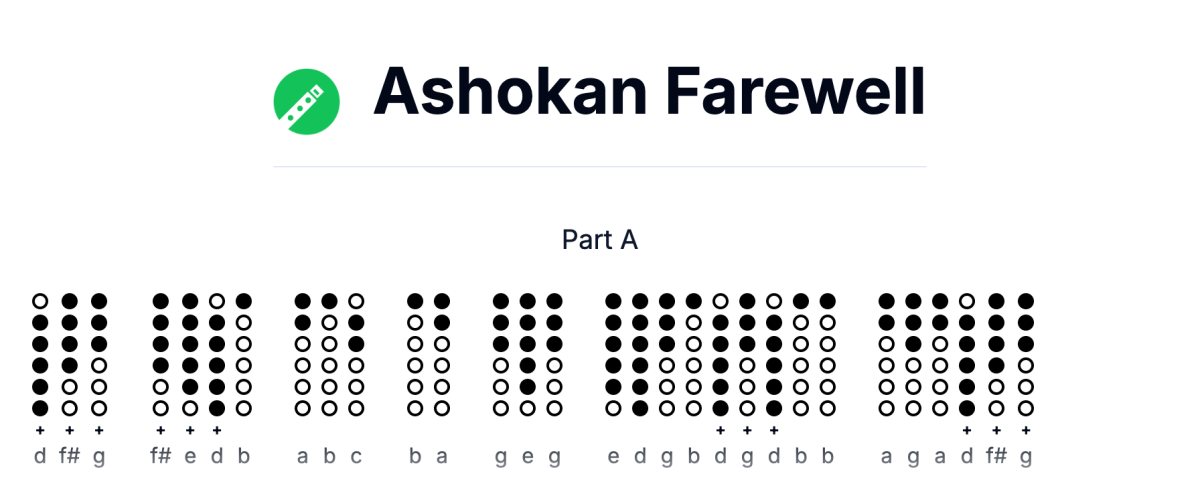
Part A of Ashokan Farewell on D whistle — the full tab has both parts. We think it belongs on this list anyway — not as a "tin whistle in film" credit, but as proof of how a single well-written melody can jump from one folk instrument to another and land just as hard. Our Ashokan Farewell tab is one of the more requested slow airs on the site.
What instrument plays the melody in Titanic?
The opening and closing themes of Titanic, including the instrumental line under "My Heart Will Go On" and the melody in "Hymn to the Sea," feature tin whistle (played by Tony Hinnigan) and uilleann pipes (played by Eric Rigler), alongside Sissel Kyrkjebø's wordless vocals. It isn't panpipes or a synthesizer patch, even though it's sometimes mistaken for one.
Is the Lord of the Rings hobbit theme really a tin whistle?
Yes. Howard Shore scored the Shire theme in "Concerning Hobbits" for solo tin whistle before the rest of the folk ensemble and orchestra come in underneath it. It's one of the most recognizable tin whistle melodies ever written for film, which is why it's the single most popular tab on this site.
Why do film composers use the tin whistle so often?
It's cheap to record, instantly recognizable, and carries emotional weight without sounding grand. A full orchestra can signal scale, but a solo tin whistle signals a person — one player, one breath, one simple melody. Composers like James Horner and Howard Shore use that contrast on purpose: pipes and orchestra for scale, whistle for intimacy.
Can beginners actually play these film themes?
Most of them, yes. "Concerning Hobbits," the Braveheart theme, and Ashokan Farewell are all built from simple, mostly stepwise melodies that sit comfortably in the first octave — they were written to be singable, not technically flashy. If you're newer to the instrument, our easy tin whistle tabs collection is a good place to build up the skills these tunes need before you tackle them.
Where to go from here
None of these tunes were written for tin whistle because it's a flashy or difficult instrument. They were written for it because it's an honest one — cheap, breathy, a little imperfect, and unmistakably human next to a full orchestra. That's exactly why they work as well on a $15 whistle in your kitchen as they do in a recording studio in London.
If film themes got you here, don't stop at the movies — our guide to famous Irish tunes covers the session standards that these same composers were drawing from in the first place. And if you're ready to play any of the tunes above, every one of them is sitting in our tab library, notation and backing track included, waiting for you to pick up a whistle.